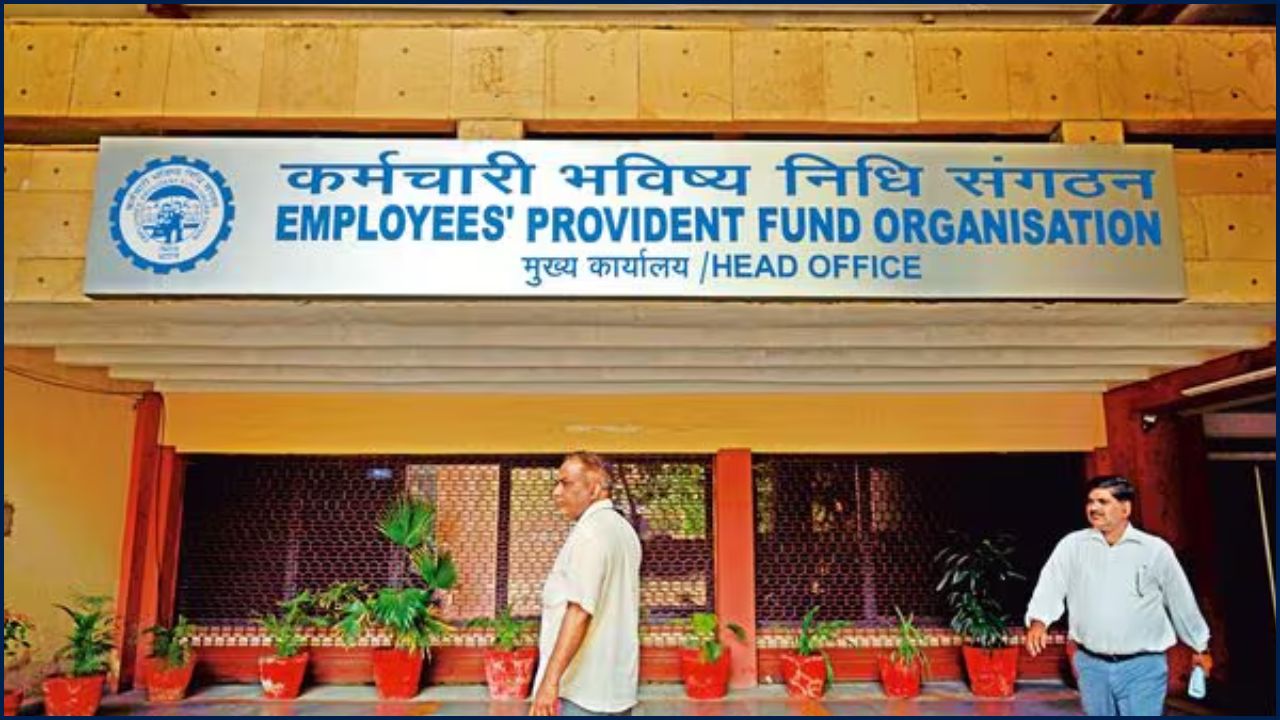
The PF interest rate for 2024–25 has been set at 8.25 percent by the Employees’ Provident Fund Organisation (EPFO), affecting more than 60 million salaried Indians. Interest is calculated monthly but credited annually, using a formula that rewards long-term contributors.
What the PF Interest Rate Means
The Employees’ Provident Fund (EPF) is a mandatory retirement savings scheme in India for salaried workers. The PF interest rate is announced each financial year after approval by the Ministry of Finance.
For the financial year 2024–25, the interest rate was fixed at 8.25 percent, the highest in three years, according to the Labour Ministry. The decision came after a review of the fund’s earnings and investment returns.
How Interest Is Calculated
Monthly Balance, Annual Credit
Interest on EPF contributions is calculated every month but credited at the end of the financial year. Each month’s closing balance earns interest at one-twelfth of the annual rate. However, the total is reflected in accounts only after March 31.
According to EPFO guidelines, interest applies both to the employee’s contribution and the employer’s contribution (excluding the portion diverted to the Employees’ Pension Scheme).
The Smart Formula
Economists explain that the effective interest earned depends on when contributions are made during the year. A contribution made in April earns interest for 12 months, while one deposited in March earns it for only a single month.
A simplified formula for calculating annual interest is: Annual Interest=∑i=112(Bi×r12)\text{Annual Interest} = \sum_{i=1}^{12} \left( B_i \times \frac{r}{12} \right)Annual Interest=i=1∑12(Bi×12r)
Here, BiB_iBi is the closing balance for month iii, and rrr is the annual interest rate.
Financial planner Ramesh Menon told The Hindu Business Line, “Many employees assume the full 8.25 percent applies to each new contribution, but the actual credit is proportional to the months the contribution remains in the fund.”
Impact on Workers
The Provident Fund is one of the largest sources of retirement income for Indian workers. According to government data, EPFO manages more than ₹18 trillion in assets.
While the official interest rate is high compared with fixed deposits, the effective yield in the first year is lower because contributions are spread across 12 months. Over time, compounding ensures long-term contributors benefit significantly.
A study by the National Institute of Public Finance and Policy (NIPFP) noted that “EPF continues to deliver consistent, tax-free returns that remain attractive compared with most small savings schemes.”
Why the Rate Matters
The PF interest rate is a key financial policy tool. It reflects both the fund’s earnings from government bonds and corporate debt, and the government’s effort to balance returns with fiscal sustainability.
Labour unions often press for higher rates, citing inflation. Employers, on the other hand, argue for sustainable payouts. The government typically strikes a middle ground.
Labour Minister Bhupender Yadav said in March, “The 8.25 percent rate balances the interests of workers with the fund’s capacity to generate consistent earnings.”
Global and Domestic Context
India’s PF scheme is among the world’s largest defined-contribution retirement funds. Analysts note that its stability is a key reason for workers’ trust.
In comparison, the Public Provident Fund (PPF) currently offers 7.1 percent, while fixed deposits in major banks range between 6 and 7 percent. Experts say the EPF’s tax-free nature enhances its real return.
Professor Anupam Gupta of Jawaharlal Nehru University told The Economic Times, “The PF interest rate not only safeguards retirement security but also reflects the health of India’s financial markets.”
Conclusion
The PF interest rate remains one of the most significant financial benchmarks for Indian workers. While the 8.25 percent figure draws attention, the actual earnings depend on contribution timing and annual crediting rules. Over the long term, the fund continues to deliver stable, tax-free growth, reinforcing its role as a cornerstone of retirement planning in India.