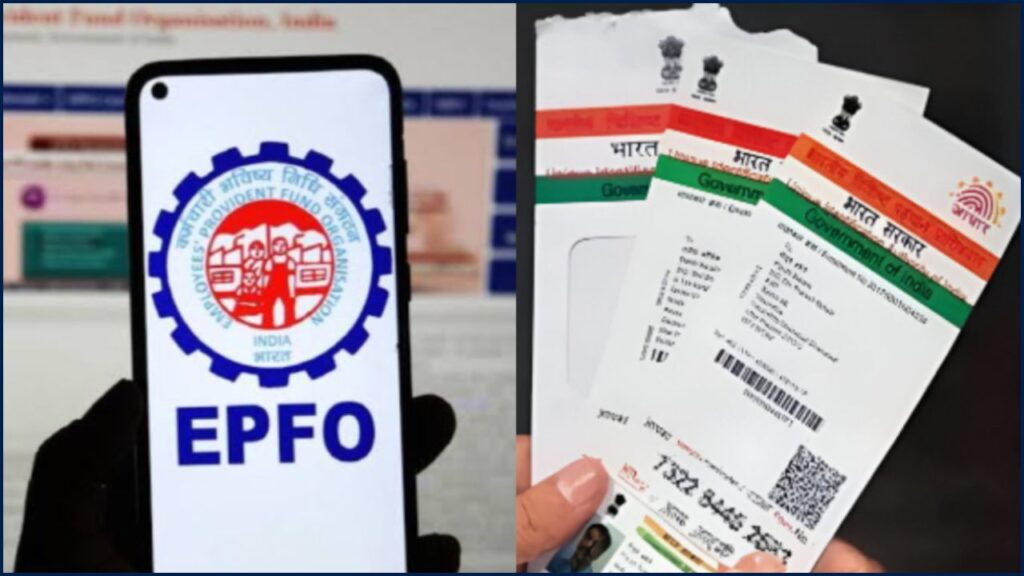
The Employees’ Provident Fund Organisation (EPFO) is urging workers to link their Universal Account Number (UAN) with Aadhaar, a move designed to speed up withdrawals, prevent errors, and unlock additional benefits. Authorities say the measure enhances transparency, reduces duplication, and aligns with digital governance goals.
Why Linking UAN with Aadhaar Matters
The UAN is a 12-digit identifier assigned to every employee contributing to India’s Employees’ Provident Fund (EPF). Aadhaar, India’s national biometric identity system, has become a critical anchor for public service delivery.
By linking both, the government aims to streamline PF services. According to the Ministry of Labour and Employment, Aadhaar verification reduces discrepancies in member data, ensures accurate identification, and eliminates duplicate accounts. This process also makes withdrawals and claims more efficient, cutting reliance on employers for attestation.
“Seeding Aadhaar with UAN is central to delivering quick and reliable services to members,” said Sunil Barthwal, Secretary of Labour and Employment, in a statement released in New Delhi earlier this year.
Key Benefits of Linking
Faster Withdrawals and Transfers
EPFO data show that Aadhaar-linked accounts reduce claim settlement time significantly. Members can access their funds without multiple levels of manual verification.
Prevention of Duplicate Accounts
Experts note that Aadhaar integration ensures a worker does not hold multiple PF accounts across jobs, making fund tracking and consolidation easier.
Access to Government Schemes
Certain employment-linked benefits require Aadhaar linkage for eligibility. Without it, members may face delays or be excluded from these schemes.
How Employees Can Link UAN with Aadhaar
Online Linking
Employees can log into the EPFO Member Portal, select “Manage → KYC,” and enter their Aadhaar details. Verification is completed through a one-time password (OTP) sent to the Aadhaar-linked mobile number.
UMANG App and e-KYC Portal
The government’s UMANG mobile app also offers Aadhaar seeding services, though users have reported occasional technical disruptions. Alternatively, the EPFO’s e-KYC portal allows linking through biometric or demographic authentication.
Offline Option
For those without Aadhaar-linked mobile numbers, an Aadhaar seeding form can be submitted through employers or Common Service Centres, along with self-attested copies of Aadhaar and UAN documents.
Challenges and Concerns
While the initiative aims for efficiency, it is not without challenges. Workers have reported delays due to mismatched details in Aadhaar and EPFO databases. Name spellings, dates of birth, and gender mismatches remain common reasons for rejected requests.
Civil liberties groups have also expressed concerns over Aadhaar’s increasing role in financial services, citing risks to privacy. However, officials argue that safeguards under the Aadhaar Act and EPFO guidelines are designed to protect member data.
Government Position
The EPFO has made Aadhaar seeding mandatory for certain functions since September 2021. In its latest advisory, the body reiterated that non-compliance may cause delays in accessing provident fund services.
Bhupender Yadav, Minister of Labour and Employment, said during a recent press briefing: “The government’s priority is to ensure workers’ savings are protected and accessible without friction. Aadhaar linkage is a step in that direction.”
Conclusion
Linking UAN with Aadhaar is no longer optional for millions of Indian workers. While the process has faced technical and administrative hurdles, officials insist the long-term benefits—speed, accuracy, and access—outweigh the challenges. For employees, the move represents a crucial reform in safeguarding and simplifying their retirement savings.