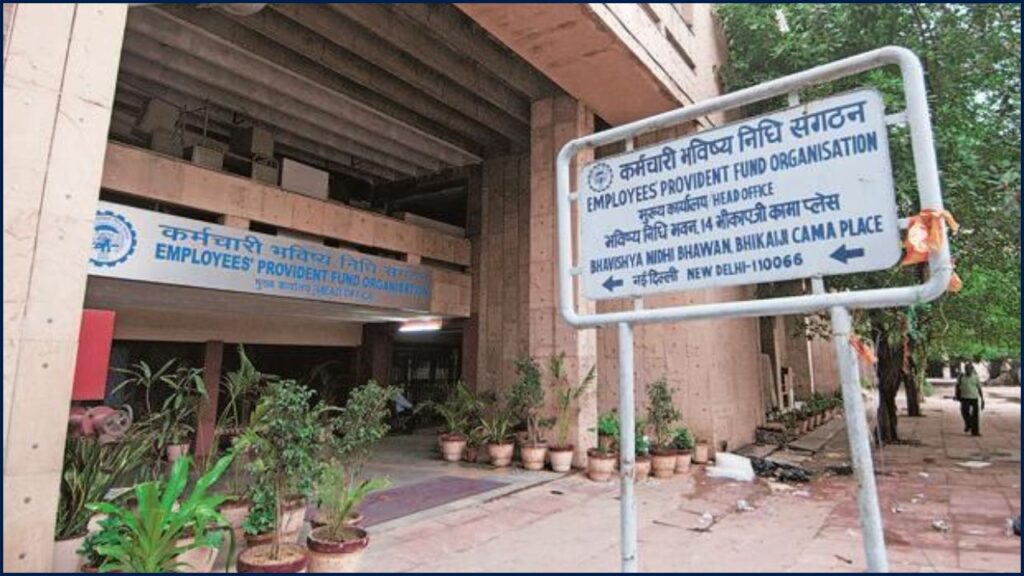
The Employees’ Provident Fund Organisation (EPFO) has clarified how members’ bank details are verified for Know Your Customer (KYC) compliance. The process, essential for provident fund withdrawals and settlements, can be completed by an employer, a bank, or through Aadhaar-based authentication. The system aims to strengthen security while ensuring faster claims for millions of subscribers.
Why Bank Verification Matters in EPFO KYC
Bank account verification ensures that provident fund benefits are transferred directly to the rightful subscriber. According to an EPFO circular, unverified or incorrect bank details can delay claims and create compliance issues. For workers dependent on timely access to retirement savings, a verified account is mandatory before any settlement is processed.
Who Can Verify Your Bank Details
Employer Verification
Traditionally, employers were the primary authority to approve bank account details submitted by workers through the EPFO’s Unified Portal. Once an employee uploaded bank information, the system marked the KYC status as “Pending for Approval by Employer.” Verification confirmed that the account belonged to the employee and matched payroll records.
Bank Verification
In recent years, EPFO has partnered with major banks such as the State Bank of India (SBI) to streamline verification. In these cases, the bank itself validates the account number and IFSC code directly with EPFO. This eliminates the need for employer intervention, reducing delays for subscribers who change jobs or face administrative hurdles.
Aadhaar-Based Authentication
Under reforms introduced between 2020 and 2023, Aadhaar-linked accounts can often be verified automatically using the National Payments Corporation of India (NPCI) database. In some instances, members receive a one-time password (OTP) on their Aadhaar-registered mobile number to authenticate their bank details. Officials say this method has improved processing speed and reduced disputes.
The Step-by-Step Process
- Employees log into the EPFO’s Unified Portal with their Universal Account Number (UAN).
- Bank account details, including IFSC code and name, are entered under the “KYC” section.
- The system sends the request to either the employer or bank, depending on the setup.
- Aadhaar-enabled verification is triggered if the bank account is linked to Aadhaar.
- Once approved, the KYC status changes to “Verified by Employer,” “Verified by Bank,” or “Verified through Aadhaar.”
Recent Changes and Their Impact
The Ministry of Labour and Employment has stated that streamlining KYC verification is part of a larger effort to modernise India’s social security infrastructure. “By integrating Aadhaar and banking systems, we are reducing the dependence on employers for basic verifications,” a senior ministry official told The Hindu earlier this year.
Experts say the changes particularly benefit contract and gig workers, whose employment status often shifts. With direct bank or Aadhaar verification, they are less dependent on former employers to approve KYC requests. However, some unions have expressed concern about privacy risks associated with Aadhaar-linked verification, calling for stronger safeguards.
What Members Should Do
EPFO advises members to ensure that their Aadhaar is linked to both their UAN and their active bank account. In cases where bank verification is not available, employees must request their employer’s approval. The organisation has urged members to regularly log in to the portal to check whether their KYC status is marked as “Verified.”
Conclusion
The EPFO’s multi-channel verification system reflects a broader trend towards digital governance in India. By allowing employers, banks, and Aadhaar-based systems to verify accounts, the organisation is attempting to balance security with convenience. For subscribers, keeping bank details updated and Aadhaar-linked remains the surest way to ensure smooth access to their provident fund savings.