The Employees’ Provident Fund Organisation (EPFO) is facing mounting criticism over its digital transformation push, particularly the recent mandate requiring face authentication for generating Universal Account Numbers (UAN). Employers and workers warn that the rollout, effective August 2025, could leave millions struggling to access their provident fund benefits due to technical and logistical hurdles.
What is Changing in EPFO 3.0?
EPFO, which oversees retirement savings for more than 277 million workers, is modernising its systems under a programme known as EPFO 3.0. According to a report by Business Today, the upgrade aims to allow faster withdrawals, simplified transfers, UPI-based transactions, and better digital dashboards for members.
The government has also integrated face authentication technology (FAT) into the UMANG app, linking accounts directly with Aadhaar. Officials say this will reduce fraud and duplication while making benefit claims more transparent.
Why Employers and Workers Are Concerned
Accessibility and Digital Divide
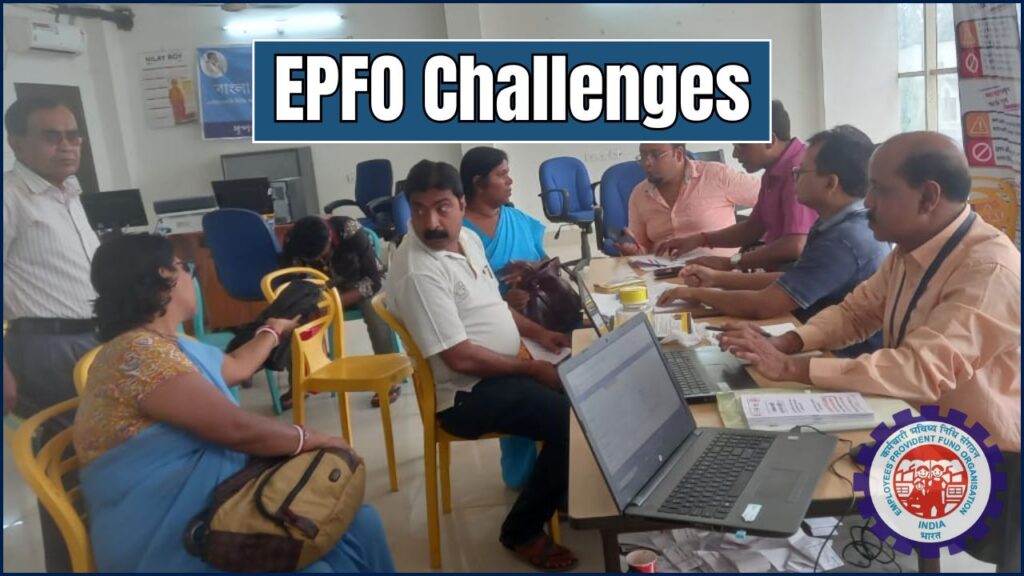
Many workers, particularly in rural areas, lack smartphones or reliable internet connections. Staffing companies argue that mandating digital verification without alternatives risks excluding large segments of India’s workforce. A report from The Indian Express quoted industry representatives saying, “The rule was implemented without adequate preparation or awareness, and this is creating unnecessary disruption.”
Technical Failures
Members have already reported issues ranging from app crashes to failures in face recognition caused by poor camera quality or lighting conditions. In some cases, mismatches between Aadhaar details and EPFO records have prevented account activation.
Lack of Transition Time
Employer groups say the abrupt rollout has left little room for adjustment. Without a grace period, companies fear payroll delays and compliance complications.
The Untold Problems Behind the Digital Push
Data Security and Privacy
India has no dedicated law regulating biometric data use. Experts warn that storing facial data alongside Aadhaar information creates risks of identity theft if safeguards are weak. Civil liberties groups have previously raised similar concerns about Aadhaar-based systems.
System Scalability
EPFO’s portals have faced repeated slowdowns. Outlook Money reported that members often struggle to log in or view their passbooks due to server overload. If face authentication becomes mandatory nationwide, the existing infrastructure may not withstand the increased traffic.
Exclusion Risks
Migrant workers, informal sector employees, and older citizens face higher chances of exclusion because of outdated Aadhaar details or weak digital literacy. Without clear fallback options, they risk being locked out of their retirement savings.
Government’s Response
The Ministry of Labour and Employment has defended the reforms, stating that biometric verification will improve transparency and reduce fraudulent claims. In a circular issued in August 2025, EPFO said face authentication was “a critical step towards building a modern, paperless, and secure provident fund system.”
Officials have also indicated that Common Service Centres (CSCs) will assist those unable to complete digital verification on their own. However, industry bodies argue that such measures remain insufficient given the scale of the challenge.
Expert Perspectives
Labour economists note that while digital reforms are necessary for efficiency, implementation gaps could undermine the very trust EPFO seeks to build. Dr. Anupama Sen, a senior fellow at the Centre for Policy Research, said, “Technology can streamline welfare delivery, but without robust safeguards, it risks widening inequalities rather than reducing them.”
What Lies Ahead
EPFO 3.0 has the potential to reshape India’s social security landscape, offering faster services and better transparency. Yet the success of this transformation depends on addressing structural barriers such as digital access, data mismatches, and privacy protections.
If left unresolved, these untold problems could erode public trust and complicate retirement security for millions of Indian workers.
Conclusion
The Employees’ Provident Fund Organisation stands at a crossroads. While its digital transformation promises greater efficiency, the transition exposes significant gaps in infrastructure, access, and trust. Balancing innovation with inclusivity will be critical for ensuring that India’s workforce can fully benefit from its retirement safety net.